Īnanga
Īnanga are one of 5 species of galaxiids that are more commonly known as whitebait. Īnanga (Galaxius maculatus) are the smallest of the 5 species and make up the majority of whitebait catch. They inhabit streams, rivers, swamps and lakes and are mostly found near the coast, as they are poor climbers, Īnanga can only make it inland if the rivers have a gradual incline.
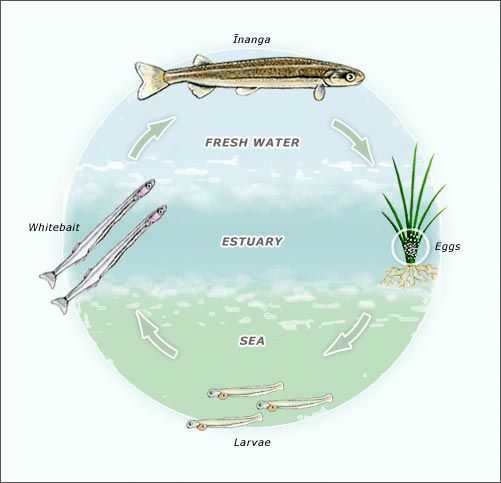
During an autumn new or full moon adult Īnanga will travel downstream and wait for a high spring tide to breed. Females will lay up to 13,000 eggs along the vegetation, these eggs will only get covered by very high tides. Male Īnanga then fertilise the eggs by releasing milt (sperm) during the same spring tide. After this process all adult fish will die, completing their years life cycle.
On the following spring tide (2-6 weeks later) the eggs will hatch and get washed out to sea. The larvae will then spend the winter at sea, mostly feeding on zooplankton.
In spring juvineile Īnanga will make their way up stream, this is the whitebait stage. Once up stream adult Īnanga mostly feed on larvae of sandflies, mayflies, cassidiflies and midges.
Īnanga are a threatened species. Overfishing is not the only threat which Īnanga face. Other threats include, destruction of vegetation on wetland and stream edges, competition and predation from introduced fish species such as the rainbow and brown trout, barriers to upstream migration like culverts and fords and high levels of algal growth, causing the fish to suffocate.