Environmental News Issue 54 - Editorial: Taking it for granted
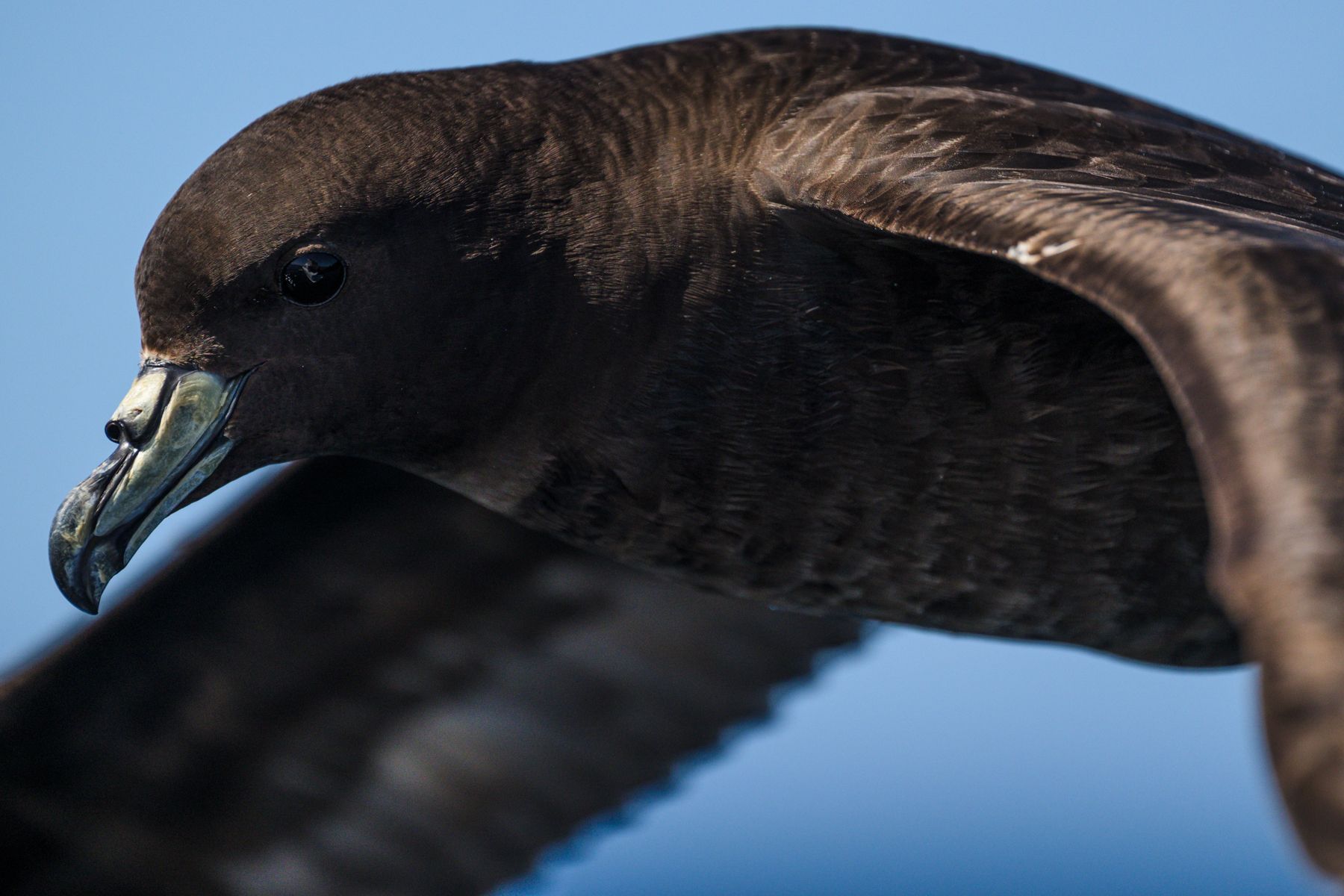
Tākoketai/Black Petrel (Credit: Edin Whitehead | The Seabird Trust)
KATE WATERHOUSE (Chair, Aotea Great Barrier Environmental Trust)
Maybe, like me, you thought the days of needing to fight to protect what you love were in the past and that we had entered an age where people understand that our wellbeing, economy and future depends on good environmental management and stewardship of resource for the future. A future in which we take for granted access to our wild spaces, swimmable rivers, abundant birdlife and fishing for a meal.
So 2026 has been a bit of a rude awakening. You would have got good odds if you had asked the TAB to take a bet on all the events of the first half of 2026 coming to pass. Starting with the climate: a record flood in January putting half the island under water, record-breaking heat waves in Europe and a potentially record breaking El Nino season on the way.
But the worst of it was perpetrated by our own government. After the closure of Predator Free 2050 Ltd, there have been more rounds of budget cuts at the Department of Conservation, which is completely consistent behaviour from a government that does not want to invest in conservation. As voters we need to ask, why is that?
Worse was to come, as on the quiet, the government is attempting to change the core purpose of the Conservation Act to economic development and remove the decision-making roles of Conservation boards and iwi in the management process. That got 75,000 people (including this trust and many readers of this magazine) motivated enough to submit to the Select Committee hearing the bill. Combined with fast-track legislation it is an out and out assault on public and iwi interests in their own lands and resources. And it is a battle that is far from over – there are factions pushing for expansion of grazing on former pastoral leases, new mines, dams and developments in areas that have already been set aside for the purposes of protecting them.
IMHO, public conservation land (PCL) is not an underutilised asset on a balance sheet; it is core to the identity of this nation, and its purpose is not and never will be commercial. Decision making about public conservation land belongs with the iwi and peoples of those places. Removing local responsibility – for example for the 60% of Aotea that is PCL— to Wellington will be the outcome of the proposed bill as written. This is a key part of a seismic change in policy which was never flagged to voters or to any person or group involved in the preceding 5 years of consultation about the necessary reforms to conservation legislation. One can speculate at what drives such behaviour, but the key task ahead of us all is to rein in this change, and the National Conservation Policy Statement and Fast-track process that go with it. Ngāi Tahu are already in court about this issue and there will be more cases if the government doesn’t respond to the feedback it is receiving.
Unfortunately, this latest ‘assault’ came hard on the heels of some questionable fisheries management decisions and a Fisheries “Amendment” bill that was a hatchet job on measures to improve the accountability of commercial fishers for bycatch and discards. This followed the ditching of promised measures to restrict or ban bottom contact fishing methods in the Hauraki Gulf Marine Park, and watered down Marine Protected Areas legislation which has left only 18% (not the agreed to 30%) of the Gulf under protection. In Te Moananui-a-Toi, the outer Gulf, only 6% of the moana is protected by fully excluding fishing. In the waters around Aotea there is zero protection.
On the 5th of July it was my pleasure to watch hundreds of people enjoying the last day of the Ngāti Rehua inspired exhibition, Ngā Huhua I Abundance, the Lifeforce of Te Moananui-a-Toi. More than 60,000 people passed through the NZ Maritime Museum while it was showing, and they were for a short time immersed in the wonder of the waters that surround us on Aotea. Research for the content of that exhibition revealed that most people seeing it would have little prior awareness of Auckland’s deep blue back yard. And that is a problem – because it is clear that once they do understand it, children and adults alike want it to be protected. There is very little marine education in schools in the Auckland region— why is that? Tamariki learn randomly from social media, unless they are raised with access to the ocean. Few are.
There is no doubt that if we want an abundant moana again, we are going to have to fight for it. Governments and MPI have allowed collapses in koura, scallops, and now of tarakihi. Those close to the detail know that forage fish, kingfish and trevally are equally vulnerable, but these stocks are not properly measured. It is clear that fisheries managers are content to fish species until they do collapse, and then, as was the case for tarakihi, blame it on climate change.
Thanks to the leadership of the Aotea Great Barrier Local Board, Ngāti Rehua and the Ahu Moana and Tai Tū Moana projects, there will now be some protection for koura/crayfish around Aotea. That is just the beginning. To protect marine life from a warming sea Te Moana-nui-a-Toi needs a rest from fishing – right out to the edge of the 12-mile coastal zone. Bottom trawling needs to halt too, to allow those sea floor habitats to slowly rebuild, and some areas need to be set aside to recover. Fletcher Beazley, Chair of the Ngāti Rehua Ngātiwai ki Aotea trust board, says we need to have a conversation about this, or the stories of past abundance will be just a memory. No-one wants that.
As I write this, avian flu has been detected here and it’s another reason to stand up for taonga species protection and more predator free islands. They need healthy populations to have resilience to pathogens like this. Chris Gaskin’s article in this issue gives us a reminder about the global seabird hotspot we live in. It’s not just black petrels like the beautiful bird on our cover, but a dozen or more other species that could call Aotea home. Chris knows what makes a healthy population – a safe breeding area (no rodents or feral cats) near their feeding grounds. Aotea, and particularly Rakitū, are perfect seabird sanctuary material—more than any other island in northern Aotearoa right now. That is something worth fighting for too.
Ngāti Rehua have known for years that the manu oī (grey faced petrels) are struggling to find food.
“The future for seabirds remains closely tied to the health of our oceans. Fisheries management, climate resilience, predator control, and habitat restoration (both marine and terrestrial) will determine whether future generations inherit thriving seabird colonies or only stories of what once existed.” Chris Gaskin
Climate warmed seas will make everything more difficult and (as climate scientists and oceans modeller Matt Pinkerton reminded us in Ngā Huhua), Te Moananui-a-Toi needs a rest now, to build resilience for that future. On Aotea and in the Auckland region we have a responsibility to demand better decisions from Government. Let’s not take the future for granted.
One lone humpback whale singing at Okupe this autumn is a hopeful sign. Hope is not a strategy for change, but it can help us deal with the challenges ahead. It is abundantly clear that we need to use our voices and votes this spring if we want to get the oceans and conservation policies we need for a future that can sustain us and the generations to come.